
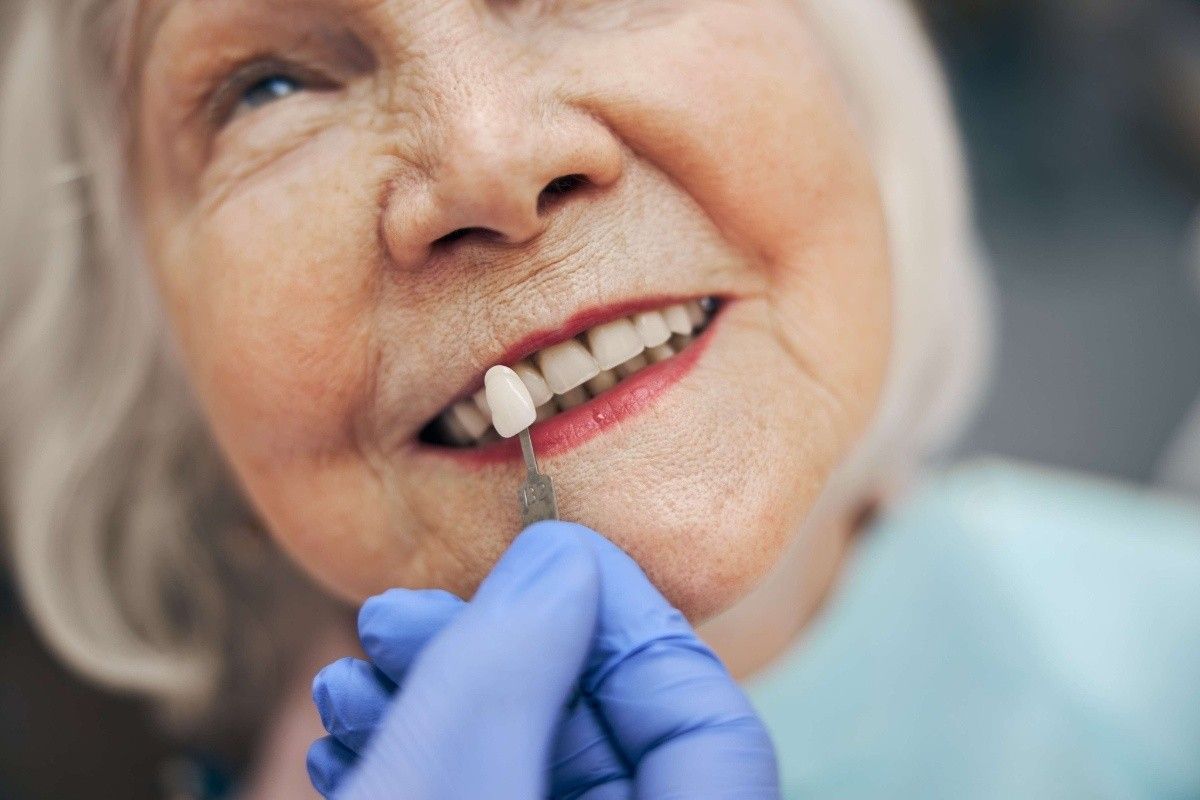
Dental veneers in South Barrington, IL may help selected patients improve front teeth that look chipped, stained, uneven, worn, narrow, or slightly misshaped. Dental crowns may be better when a tooth is cracked, weak, heavily filled, or needs more protection. Patients in South Barrington and Lake Barrington should have enamel, gum health, bite pressure, old restorations, missing teeth, and cosmetic goals reviewed before choosing veneers, crowns, bridges, bonding, or whitening.
A front tooth problem can be both cosmetic and functional. A chip may affect the way light reflects a smile. A worn edge may change the shape of a tooth. A crack, large filling, or old restoration may raise a different question: does the tooth need beauty, strength, or both?
Dental veneers in South Barrington, IL may be discussed for selected front teeth when the concern is mostly about the visible surface. Dental crowns in South Barrington, IL may be discussed when a tooth needs more coverage and support. Patients in South Barrington often need help understanding the difference because both options can improve appearance. The better choice depends on enamel, tooth structure, bite pressure, gum health, and whether the tooth has been weakened by decay, cracks, or past dental work.
What Veneers Are Designed to Do
Veneers are thin restorations placed on the front surface of teeth. They may help with chipped edges, deep stains, worn surfaces, uneven shapes, small cosmetic spaces, or teeth that look slightly narrow.
A veneer changes the visible face of the tooth, but it does not strengthen the whole tooth in the same way a crown can. That is why veneers are often considered when the tooth has enough healthy enamel and the main concern is appearance.
The dentist should also check the bite. Front teeth guide chewing movements, and excess pressure can affect how veneers perform.
What Crowns Are Designed to Do
Crowns cover more of the teeth than veneers. They may be recommended when a tooth is cracked, heavily filled, worn down, weakened by decay, or has had root canal treatment.
A crown can improve appearance while also protecting remaining teeth. It may be used on front or back teeth depending on the need.
Patients should understand that crowns involve more tooth coverage than veneers. The recommendation should be based on tooth strength, not only on cosmetic preference.
How the Dentist Decides Between Them
The choice between a veneer and a crown begins with a diagnosis. The dentist checks how much natural tooth remains, whether enamel is strong enough, whether decay is present, and whether old fillings affect the tooth.
A dentist in South Barrington, IL may also evaluate gumline, tooth color, bite pressure, and smile balance. If the tooth is healthy but misshaped or stained, a veneer may be possible. If the tooth is weak or cracked, a crown may be safer.
The right plan should protect the teeth beneath the restoration. A beautiful result still needs a stable foundation.
Lake Barrington Patients May Ask Similar Questions
Cosmetic and restorative decisions are not limited to one town. Someone searching for a dentist lake Barrington, IL may have the same concerns about chipped teeth, old crowns, worn edges, or visible fillings.
A family dentist at Lake Barrington, IL may first notice bite wear, gum recession, or older restorations during routine visits. These findings can shape cosmetic planning later.
For example, if a tooth keeps chipping because of grinding, a veneer alone may not solve the cause. Bite pressure may need attention before or after the restoration.
When Missing Teeth Affect Smile Planning
Missing teeth can change the way the rest of the teeth meet. Chewing may shift to one side. Nearby teeth may move. This can affect both cosmetic appearance and restorative planning.
Patients considering dental bridges lake Barrington, IL may need replacement of a missing tooth before or along with front-tooth cosmetic work. A bridge restores a space, while veneers and crowns change or protect existing teeth.
If the bite is unbalanced because of a missing tooth, the dentist may recommend addressing function before making final cosmetic decisions.
Stains, Chips, and Old Fillings Need Different Solutions
A dark stain on natural enamel may respond to whitening. A stain inside an old filling will not. A small chip may be repaired with bonding, while a larger damaged tooth may need a veneer or crown.
Old fillings near the front of the mouth can change color over time. If the filling is small and the tooth is strong, replacement or bonding may be enough. If the filling is large, a crown may be discussed.
The dentist may show patients which concerns are cosmetic surface issues, and which are structural problems. This can prevent over-treatment or under-treatment.
Gum Health Shapes the Final Look
Healthy gums help frame veneers and crowns. If gums are inflamed, swollen, or bleeding, the final margin may be harder to plan. Gum disease can also affect tooth support.
Before cosmetic treatment, the dentist may recommend cleaning, improved home care, or periodontal evaluation if needed. This helps create a cleaner, healthier foundation.
The gumline also affects symmetry. Recession, uneven tissue levels, and inflammation may change how a restoration looks once placed.
Bite Pressure Can Shorten Restoration Life
Grinding, clenching, nail biting, chewing ice, or using teeth as tools can damage veneers, crowns, and natural teeth. The dentist may look for flattened edges, cracks, jaw soreness, or repeated restoration breakage.
If bite pressure is present, the care plan may include a nightguard or other guidance. Some patients may also need bite adjustment or treatment sequencing to reduce stress on restorations.
A veneer or crown should be planned for real daily function, not only for a photo.
What Patients May Appreciate About Comparing Options
Comparing veneers and crowns can help patients make more informed choices.
A veneer may help:
- Improve surface color and shape
- Repair selected chips
- Balance front-tooth appearance
- Preserve more tooth structure in suitable cases
A crown may help:
- Protect a weakened tooth
- Cover large fillings or cracks
- Restore chewing strength
- Improve appearance and function together
- Support a tooth after major treatment
- The right choice depends on the diagnosis. Some smiles may need one veneer, one crown, or a mix of treatments.
What Usually Happens During Treatment Planning
Before treatment, the dentist reviews the patient’s goals, teeth, gums, bites, and dental history. X-rays, photos, impressions, or scans may be recommended depending on the case.
During planning, the dentist explains which teeth may need veneers, crowns, bonding, whitening, bridges, or monitoring. The order matters. Whitening may happen before final shade selection. Gum care or bite review may come first.
After restorations are placed, patients should keep regular dental visits, clean carefully around the gumline, and avoid habits that stress the teeth. Follow-up helps check bite, comfort, and tissue health.
Local Patient Review
“I wanted my front teeth to look better, but the visit helped me understand why one tooth needed strength while another only needed a cosmetic surface change.”
Strong Cosmetic Results Begin with Careful Diagnosis
Veneers and crowns can both improve a smile, but the best choice depends on tooth structure, gum health, bite force, missing teeth, and long-term function. Pennino Family Dentistry can help patients compare cosmetic and restorative options with practical guidance for healthier, more confident daily care.
Frequently Asked Questions
Are veneers and crowns the same thing?
No. Veneers cover mainly the front surface of teeth, while crowns cover more tooth structure and offer more protection.
Which option is better for a chipped tooth?
It depends on the chip size, tooth strength, bite pressure, and enamel. Small chips may need bonding, veneers, or crowns.
Can crowns look natural on front teeth?
Crowns can be designed to blend with nearby teeth. Shades, shape, gumline, and bite all affect the final appearance.
Do veneers work on weak teeth?
Not always. Weak, cracked, heavily filled, or root canal-treated teeth may need crowns instead of veneers.
Should gums be treated before cosmetic work?
Yes, if gums are inflamed or bleeding. Healthy gums help support better fit, comfort, and appearance.
Can missing teeth change veneer planning?
Yes. Missing teeth can affect bite and spacing. Replacement options may need to review before final cosmetic treatment.
Will veneers or crowns stain?
Restorations do not stain like natural enamel, but edges and surrounding teeth can change. Good home care and visits matter.
How do I know which treatment I need?
A dental exam is the safest way to decide. The dentist checks structure, enamel, gums, bite, and cosmetic goals before recommending care.